
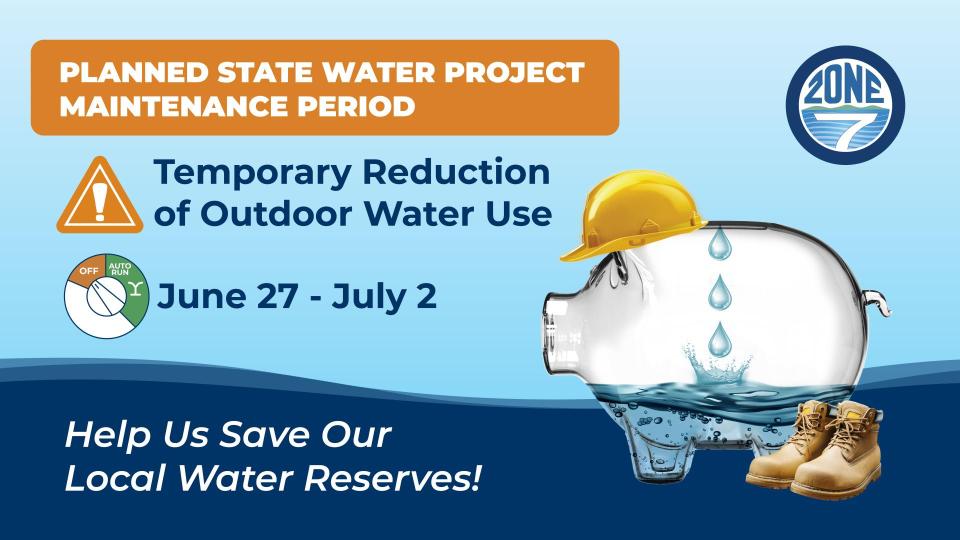
Planned State Water Project Maintenance Period
Frequently Asked Questions
Why is Zone 7 asking people to conserve?
A key portion of the State Water Project that supplies imported water to the Tri-Valley will be
temporarily unavailable while the California Department of Water Resources (DWR) completes
essential upstream maintenance.
Is there enough water?
Yes. Zone 7 has planned for the maintenance period and will continue providing water service for essential indoor needs throughout the maintenance period using local groundwater reserves and locally stored imported water.
Why pause outdoor watering?
Outdoor irrigation is one of the largest water uses during the summer months. Temporarily
reducing outdoor watering from Saturday, June 27 through Thursday, July 2 will significantly
reduce demand and help preserve available supplies for:
• Essential indoor use
• Firefighting
• Unexpected emergencies
Is this drought-related?
No. This request is solely related to planned maintenance and is temporary.
How can I prepare before June 27?
Residents and businesses can take the following steps before the maintenance period begins:
• Deep water landscapes using multiple short irrigation cycles.
• Raise lawnmower blades to leave grass longer and leave clippings as natural mulch.
• Top off pools and use a pool cover to reduce evaporation (Zone 7 has a pool cover rebate).
• Wash vehicles, patios, and outdoor furniture during the week before the shutdown.
• Check irrigation lines and repair leaks.
• Turn off automatic irrigation systems on or before June 27.
When will normal operations resume?
Normal imported water deliveries are expected to resume after maintenance is completed.
Residents and businesses may fully resume normal outdoor water use on Friday, July 3, just in
time for the Fourth of July holiday weekend.
As many residents will be celebrating outdoors, using pools, traveling, or hosting gatherings,
Zone 7 encourages everyone to plan ahead before the maintenance period begins. Taking
simple steps now—such as filling pools in advance and turning off irrigation systems before leaving town—can help ensure sufficient water supplies remain available for essential
community needs throughout the maintenance period.